Travel in 2027: Why the best holidays may be the ones with less in them

By Pru Goudie
Lemongrass Marketing’s 2027 Travel Trend Report highlights a shift away from packed itineraries and bucket lists towards deeper experiences, human connection and more intentional travel.
Lemongrass Marketing, an ATN Business member and B Corp-certified travel PR and content agency, has released its 2027 Travel Trend Report, identifying 15 trends set to shape the travel industry over the next 12 months.
The findings point to a growing desire for slower, more rewarding experiences, with travellers prioritising wellbeing, depth and connection over doing more.

Less rushing, more living
One of the report’s headline findings is the rise of the anti-optimised holiday. Travellers are tiring of itineraries that feel like another productivity exercise, with simpler plans, longer stays, fewer destinations and more unstructured time increasingly coming into their own.
The ultimate luxury? Permission to do nothing.
This is a particularly interesting shift for adventure travel, where active itineraries and once-in-a-lifetime experiences can sometimes mean packing as much as possible into a limited time. There is still an appetite for adventure, but the opportunity lies in giving travellers the time and freedom to enjoy it at their own pace.
That might mean spending longer in one destination, walking without a fixed schedule, lingering over a meal with local hosts or allowing an unexpected encounter to shape the day.
The wider wellness movement is evolving in a similar direction. Rather than focusing solely on treatments, diagnostics and biohacking, the report’s Nervous System Design trend suggests that hotels and destinations will increasingly consider how their entire environment can support restoration, from lighting and acoustics to nature, movement and human connection.
The message is that feeling better does not always require another activity to add to the itinerary.
From bucket lists to deeper connections
Technology is also changing what travellers value. AI can now generate itineraries, recommend attractions and provide vast amounts of destination information in seconds. Yet the report suggests that this convenience is creating a stronger appetite for what algorithms cannot easily replicate: genuine understanding, experience and human judgement.
The shift from bucket list to depth list places greater emphasis on expert-led experiences, cultural trails, history, literature, architecture, workshops and conversations with local people.
ATN has also explored this shift through its work championing Indigenous tourism, highlighting the importance of moving beyond simply visiting a destination to creating opportunities for cultural exchange, learning and connection with Indigenous communities.
For tour operators, destination management companies and travel agents, this reinforces the value of first-hand knowledge and specialist expertise. The ability to offer an informed perspective, introduce travellers to local communities and reveal a destination beyond its familiar highlights can be a powerful differentiator.
Trust is becoming increasingly important, too. As AI-generated information, synthetic imagery and sponsored recommendations become harder to distinguish from reliable advice, travellers may place greater value on recommendations from people who know a destination because they have experienced it themselves.
As Mirjam Peternek McCartney, CEO and Founder of Lemongrass Marketing, puts it:
“AI makes human judgement more valuable. A desire for restoration drives slower travel. Information overload creates a hunger for depth and expertise.”
For adventure travel businesses built on specialist knowledge, local partnerships and personal recommendations, this presents a clear opportunity to demonstrate what makes their offering different.
Adventure with purpose
Several of the report’s supporting trends have particular relevance for the adventure travel sector, reflecting growing interest in nature, personal discovery and positive impact.
Citizen science highlights the potential for travellers to take an active role in protecting the natural environments they visit. Wildlife monitoring, water sampling and recording species can turn an outdoor experience into an opportunity to contribute to conservation, while building a deeper connection with a place.
The Giving Journey explores a related desire to leave destinations better than we found them. Travellers increasingly want their trips to make a positive difference, but the report emphasises that meaningful contributions need to be locally led. Travel businesses can help connect guests with credible conservation and community initiatives without falling into the pitfalls of traditional voluntourism.
Meanwhile, Earned Travel suggests that convenience is no longer the only priority. Navigating a remote landscape, finding your own way or embracing the unexpected can become part of the appeal. The effort involved is not necessarily an obstacle; it can be what makes the experience memorable.
These trends underline the potential for adventure travel to offer something increasingly sought after: experiences that engage travellers with the world around them, rather than simply allowing them to observe it.
Travel that feels good – and does good
The report also explores how changing expectations around climate, sustainability and spending will influence travel decisions.
From Coolcations to Adapted Destinations suggests that travellers will increasingly look beyond escaping hot weather to consider how destinations and tourism businesses respond to changing conditions. Resilient infrastructure, flexible experiences and strong local knowledge will all matter.
At the same time, Journeys Without Sacrifice or Sermon challenges the idea that sustainable travel has to involve compromise. Rail travel, for example, can appeal because it offers a scenic, comfortable and enjoyable way to experience a journey, not simply because it is a more responsible choice.
As the report puts it, sustainability succeeds when it delivers “the better experience” rather than relying on travellers being told what they should do.
Other trends point to growing interest in female-led narratives, folklore-rich destinations, regional and short-haul escapes, and travel that prioritises joy, friendship and emotional wellbeing. Luxury, too, is becoming more intentional, with travellers increasingly choosing where to spend more and where to save.
Taken together, these findings suggest that travellers are becoming more selective about how they spend their time, money and attention – and more interested in experiences that align with their individual priorities.
ATN’s contribution: putting people and positive impact at the heart of travel
Adventure Travel Networking (ATN) was proud to contribute to the report, sharing its perspective on the trends shaping adventure travel and the wider industry.
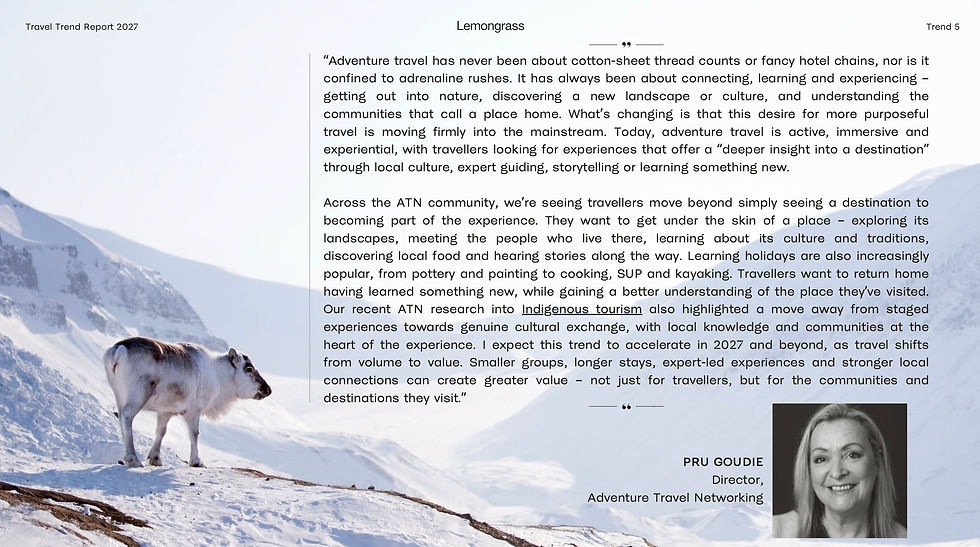
The report brings together perspectives from across travel and beyond, including explorer and author Levison Wood, academics Esther Sternberg M.D. and Professor Willy Legrand, and bookshop pioneer Starlin Marot, alongside wellness experts, travel editors and futurists.
This breadth of insight reflects the interconnected nature of the changes taking place. Traveller expectations are being influenced not only by developments within tourism, but also by wider questions around wellbeing, technology, trust, climate and how people want to live.
For the adventure travel community, these themes reinforce the importance of creating experiences that respect the places people visit, support local communities and offer genuine opportunities for connection and discovery.
A more human future for travel
Ultimately, Lemongrass Marketing’s 2027 Travel Trend Report offers an optimistic perspective on the future of travel.
Travellers are not retreating from the world. They are recalibrating their relationship with it - choosing fewer but deeper experiences, placing greater value on human connection and questioning whether more really does mean better.
For the travel industry, the challenge is to look beyond individual trends and understand the needs connecting them. Successful experiences will not simply be those that offer more technology, more luxury or more personalisation. They will be those that give travellers something they genuinely value.
As Mirjam Peternek McCartney concludes:
“The opportunity for travel brands in 2027 is to stop thinking about trends in isolation and start responding to the deeper human needs connecting them. Perhaps that’s the most hopeful trend of all.”
To access the Lemongrass Annual Travel Trend Report
-ENDS-

Lemongrass is an award-winning PR & Content agency for travel brands with impact and purpose, in the world’s most beautiful destinations. We are a certified B Corp and have twice been recognised as a Sunday Times Best Places to Work Company, most recently in 2025.
Lemongrass is a Business Member of ATN