InsideJapan Launches Overtourism Strategy, Highlighting Five Under-Touristed Destinations

by Pru Goudie
In response to the growing challenges of overtourism in Japan, Inside Travel Group and InsideJapan are launching a new ‘under-tourism’ initiative – an overtourism strategy aimed at balancing visitor distribution, easing pressure on hotspots, and propelling more sustainable travel.

This year marks the 25th anniversary of InsideJapan offering small group tours and self-guided cultural adventures. Inside Travel Group Co-Founder Simon King reflects on how the landscape of travel to Japan has drastically changed over the past two and a half decades.
“Japan, once a niche destination with just 4 million visitors when InsideJapan started in the year 2000, has seen a 600% increase in tourism, welcoming 36 million visitors in 2024. By 2030, that number is projected to rise to 60 million,” King said.
“While this growth has benefited the Japanese economy significantly, it has also brought inevitable challenges. Over the past two years, overtourism issues have been increasingly captured in the media.
Image Credits: Inside Asia
“We know that 80% of travellers visit only 10% of destinations and we want to change that. There are more people than ever visiting the same small number of places.” King added.
To address these challenges, InsideJapan is spearheading a new strategic ‘under-tourism’ initiative aimed at easing the burden of overtourism and managing its impacts. In 2024, the Japan specialists sent travellers to 219 different destinations across all 47 prefectures on self-guided cultural adventures and on small group tours.
“We’ve helped thousands of people discover Japan over the years, championing a type of travel that gets beneath the surface and immerses visitors in local life and culture,” King said. “With ever-growing visitor numbers, we believe part of the solution to overtourism lies in dispersing travel to lesser-known parts of the country.
Image Credits Inside Asia:
Left to Right: Ainokura; Craft person Toyama; Hirosaki castle Aomori
“We have the unique ability to guide our visitors to these regions. This initiative will not only alleviate the pressure the country’s most visited sites but will also foster economic growth and rural regeneration in underexplored areas. Of course, it is crucial that this dispersal is managed thoughtfully to prevent shifting the problem elsewhere – and that’s where our sustainability team comes in.” Inside Travel Group Global Sustainability Manager Rob Moran said driving visitation to under-visited regions lies at the heart of the under-tourism strategy, with five focus regions selected for 2025.
“The five regions for 2025 are Yamaguchi, Nagasaki, Toyama, Nagoya and Aomori. These locations are spread across the north, central and south of mainland Honshu, as well as the southern island of Kyushu,” Moran said.

“Our strategy considers both carrying capacity, which relates to the physical limits of destinations, and social licence to operate, which takes into account community perceptions, cultural and social impacts, and harmony between visitors and residents.”
InsideJapan has selected it’s five regions based on requirement that they are:
Located outside of Japan’s top five prefectures (Tokyo, Osaka, Kyoto, Hokkaido, and Fukuoka).
Currently attracting fewer than 10% of visitors to Japan (according to government statistics).
Operating well below their perceived carrying capacity.
Easily accessible with strong public transport infrastructure.
Approved and supported by local tourism boards.
Providing an authentic cultural experience.
Together with local regions and Destination Management Organisations (DMOs), InsideJapan will enhance its product in each of the regions throughout 2025, encouraging travellers to combine one or more of these locations into their cultural adventure trip in Japan.
As part of this initiative, InsideJapan has also reduced the prices of off-peak and shoulder-season Small Group Tours by up to 15% to help disperse visitors both seasonally and geographically. “This is all part of our wider strategy which includes using our destination insight to suggest alternative districts and offer travel tips together with cultural advice to ensure a better experience all round, in places that are beginning to suffer from overtourism,” King said.
“This is about showcasing the uniqueness of Japan’s culture through beautiful places and the communities that make them, whilst creating richer experiences and amazing holidays for our clients”.

A dedicated microsite, highlighting the five places and a raft of experiences, will be launched soon by Inside Japan.
The five regions
Toyama: A bullet train journey from Tokyo, on the edge of the Japanese Alps and Japan Sea Coast, Toyama is home to unique crafts, traditional buildings, natural beauty and incredible food. The area and communities have invested in a programme of rural regeneration offering unique traditional accommodation, local crafts people have opened their doors, and one district has a street with no less than six Michelin restaurants.

Image Credits Inside Asia: Rakudoan, Toyama Nagasaki: Built on the shores of a natural bay, Nagasaki's rich history as a trading port and the only place in Japan open to the outside world for over 250 years, is reflected in its local culture. The city sits on the Shimabara peninsula opening the door to traditional farming and fishing communities, is surrounded by traditional hot spring towns and is also the departure point for the island of Gunkanjima – once, one of the most densely populated places on earth but mysteriously abandoned.
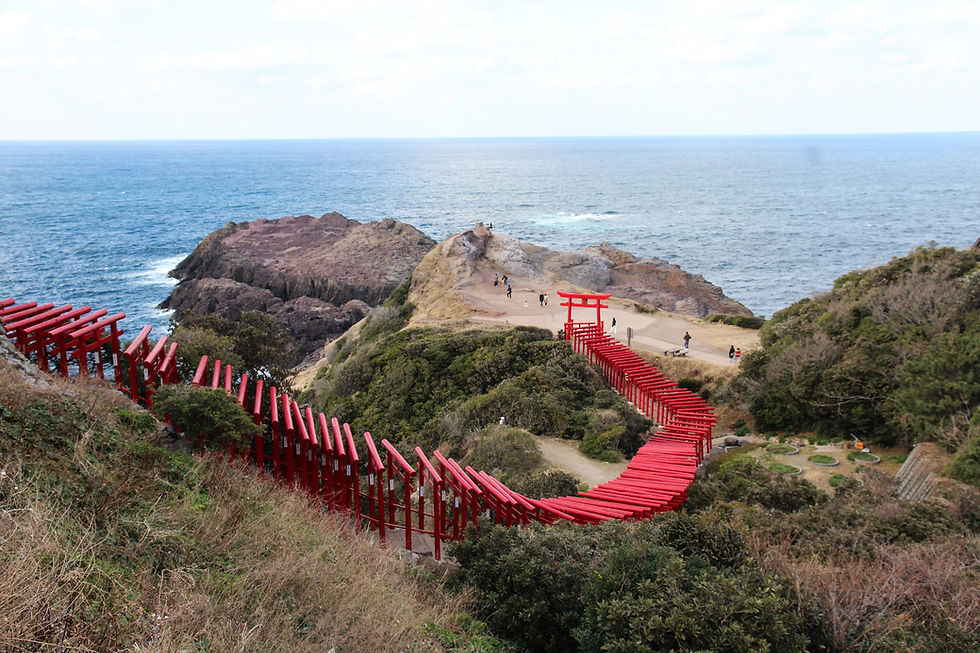
Image Credits Inside Asia:Motonosumi Inari Shrine, Nagato Yumoto Onsen Yamaguchi Yamaguchi: This small city was once known as ‘Little Kyoto’ with Rurikoji temple named as one of the official ‘most beautiful temples’ in Japan. The nearby coastal old town of Hagi is one of the best-preserved samurai towns in Japan and his home to some of the most prized ceramics in Japan. The traditional hot spring town of Nagato Yumoto Onsen dates back over 600 years, is home to impressive shrines with hundreds of red tori gates and some special traditional ryokan accommodation.

Image Credits Inside Asia: Osu Kannon Bell Nagoya Nagoya: Nagoya has an unfair reputation for being a dull industrial town, but this is an exciting city. Scratch beneath the surface and you’ll find it’s an art-lover’s haven, with scores of galleries featuring local and internationally acclaimed artists. The nearby town of Tokoname is a ceramics haven, Inuyama is home to one of Japan’s twelve original Edo period castles, and the Nakasendo samurai walking route is nearby. Nagoya is also the Japanese home of InsideJapan

Image Credits Inside Asia: Inuyama Nagoya Aomori: Aomori sits between the coast and the mountains in the far northern Tohoku region of Japan’s main island of Honshu. The samurai castle town of Hirosaki sits nearby with one of Japan’s last few original castles and one of the best-preserved samurai districts in Japan. There are also traditional hot spring towns and one of Japan’s most impressive caldera lakes.

Image Credits Richard Farme: Aomori Shirakami 'Aoike' train passing through Juniko
-ENDS-
Inside Travel Group is a B Corp Certified global tour operator with two multi-award-winning brands, InsideJapan Tours® and InsideAsia Tours®. InsideJapan Tours was established in 2000 by Co-founders Alastair Donnelly and Simon King and has
become the biggest independent Japan travel specialist offering escorted
Small Group Tours, self-guided and fully tailored Cultural Adventures.

📌 Save The Date
The ATN26 Conference takes place on Thursday 26 February in London Waterloo
Tickets will be on sale soon